Secret Histories: A New Era in Constance Fenimore Woolson Scholarship, March 2025
Edited by Kathleen Diffley, Caroline Gebhard, Cheryl Torsney
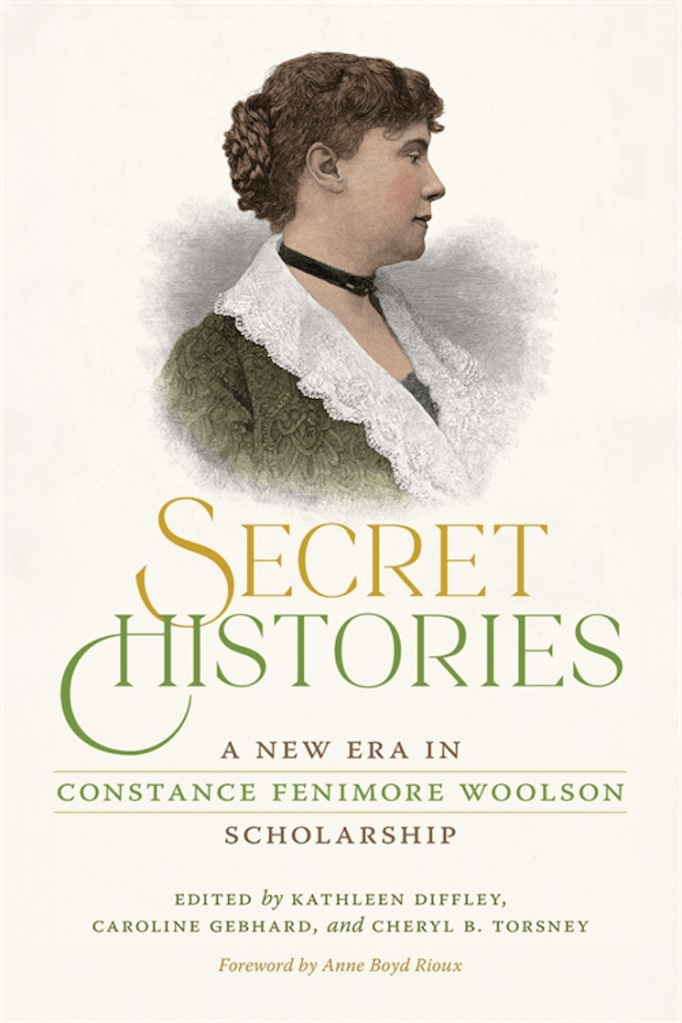
The essays in this volume explore Constance Fenimore Woolson’s range in period and genre as well as place, from the Great Lakes to the defeated South and across storied Europe to the Mediterranean. The whole of her professional life comes alive in this collection’s triptych.
The first section, “A Writer’s Experiments,” reveals Woolson’s play with familiar genres and unfamiliar characters began during the 1870s and extended until she died in 1894.
The second section, “Postbellum Souths,” follows Woolson’s travels through a land ravaged by war and injustice. The third section, “Through an International Lens,” considers expatriate perceptions of European and Mediterranean cultures as well as misconceptions about the Gilded Age United States.
Constance Fenimore Woolson’s Subversive Politics, June 2023
Victoria Brehm
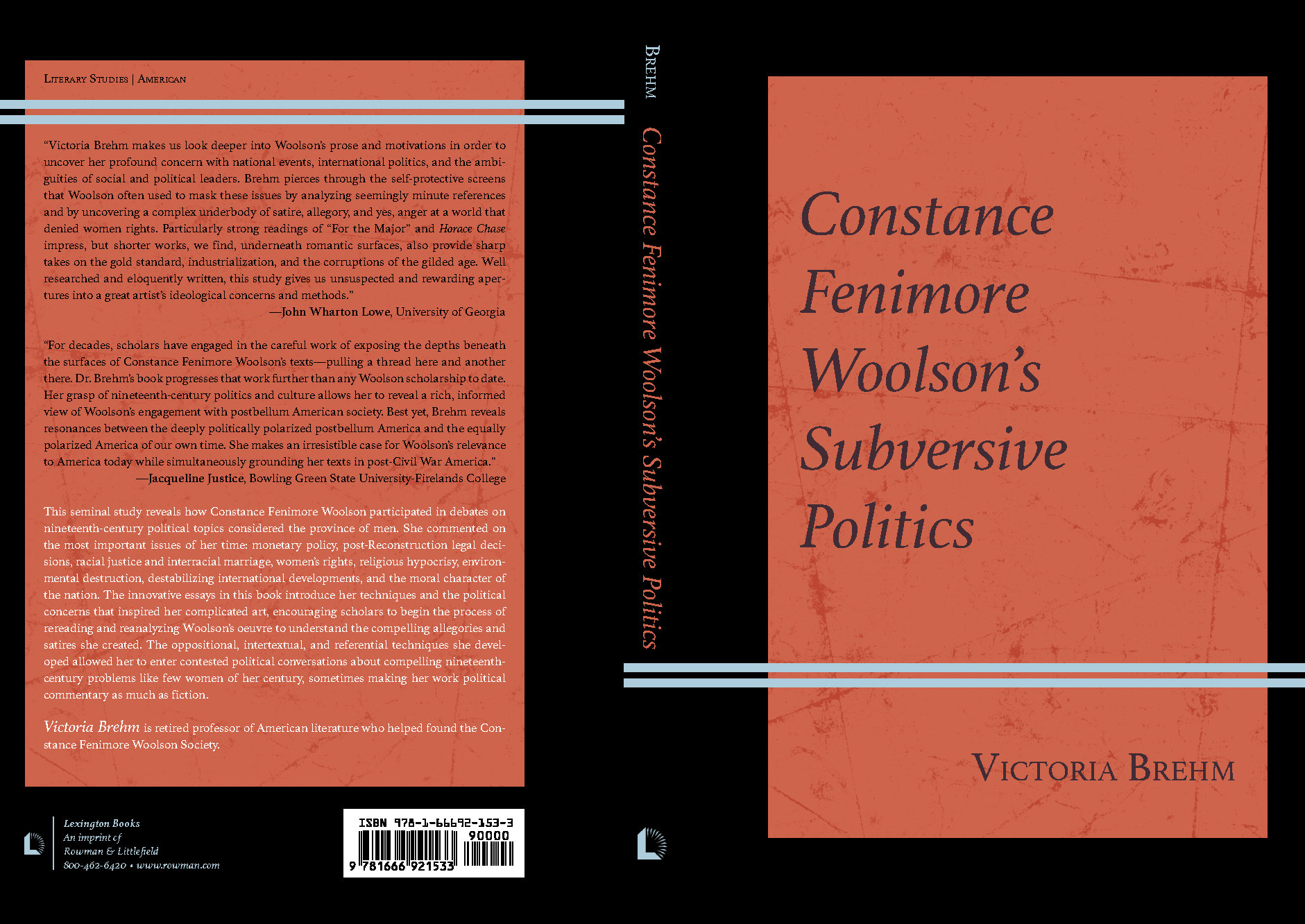
This seminal study reveals how Constance Fenimore Woolson participated in debates on nineteenth-century political topics considered the province of men by unobtrusively slipping references, names, and dates into her fictions, poetry, and travel narratives where alert readers could recognize her allusions. This technique gave her the ability to comment on the most important issues of her time: monetary policy, post-Reconstruction legal decisions, racial justice and interracial marriage, women’s rights, religious hypocrisy, environmental destruction, destabilizing international developments, and the moral character of the nation. The innovative essays in this book introduce her techniques and the political concerns that inspired her complicated art, encouraging scholars to begin the process of rereading and reanalyzing Woolson’s oeuvre to understand the compelling allegories and satires she created and how those relate to the surface narratives she wrote to earn her living. The oppositional, intertextual, referential techniques she developed allowed her to enter contested political conversations about compelling nineteenth-century problems like few women of her century, sometimes making her work political commentary as much as fiction.
 Constance Fenimore Woolson